

Period Pains But No Period Explained
Feeling those familiar, frustrating cramps but seeing no sign of your period can be confusing and, let's be honest, a bit unsettling.
While cramping is the classic signal for menstruation, the truth is that many other completely normal bodily processes can trigger the same sensation. These phantom pains are often caused by natural events like ovulation or can even be an early clue of pregnancy.
Why You Feel Period Pains Without a Period
It’s an experience most of us have had at some point. That dull ache or sharp twinge in your lower abdomen feels exactly like your period is about to start, but then… nothing. Understanding the potential reasons behind these cramps can give you some peace of mind and help you tune into your body’s unique rhythm.
For many, this sensation is just a regular part of their cycle. It's especially common here in Aotearoa New Zealand, where painful menstruation, known as dysmenorrhea, is widespread. Research shows that over half of Kiwi women have moderate to severe period pain, and a notable number also report pelvic pain when not menstruating.
In fact, 12% experience this discomfort for three or more days outside of their period, which can significantly affect daily life, sometimes even leading to missed work or school. You can learn more about the prevalence of period pain in New Zealand in this scoping review.
Quick Guide to Potential Causes of Cramps Without a Period
So, what could be causing these non-period pains? This table breaks down some of the most common culprits, what they typically feel like, and when you might experience them in your cycle.
| Potential Cause | What It Feels Like | Common Timing in Your Cycle |
|---|---|---|
| Ovulation | A one-sided, sharp, or dull ache in the lower abdomen (known as Mittelschmerz). | Roughly 10–14 days before your next period is due. |
| Implantation | Mild, fleeting cramps that are often less intense than typical period pain. | Around 6–12 days after ovulation, just before your period is expected. |
| Endometriosis | Deep, persistent, and often severe pelvic pain that can occur at any time. | Can happen throughout the cycle, but often worsens around your period. |
| Digestive Issues | Generalised abdominal cramping, often accompanied by bloating, gas, or changes in bowel habits. | Can happen at any time, but hormonal shifts can make it worse. |
| Pelvic Inflammatory Disease (PID) | Dull, aching pain in the lower abdomen, which may also come with unusual discharge or fever. | Can occur at any time, but symptoms might be more noticeable after your period. |
This is just a starting point, of course. Your body is unique, and tracking your symptoms alongside your cycle can offer incredible insight into what’s really going on.
Common Causes at a Glance
The infographic below zeroes in on three of the most frequent reasons you might feel that all-too-familiar cramp when you're not on your period.
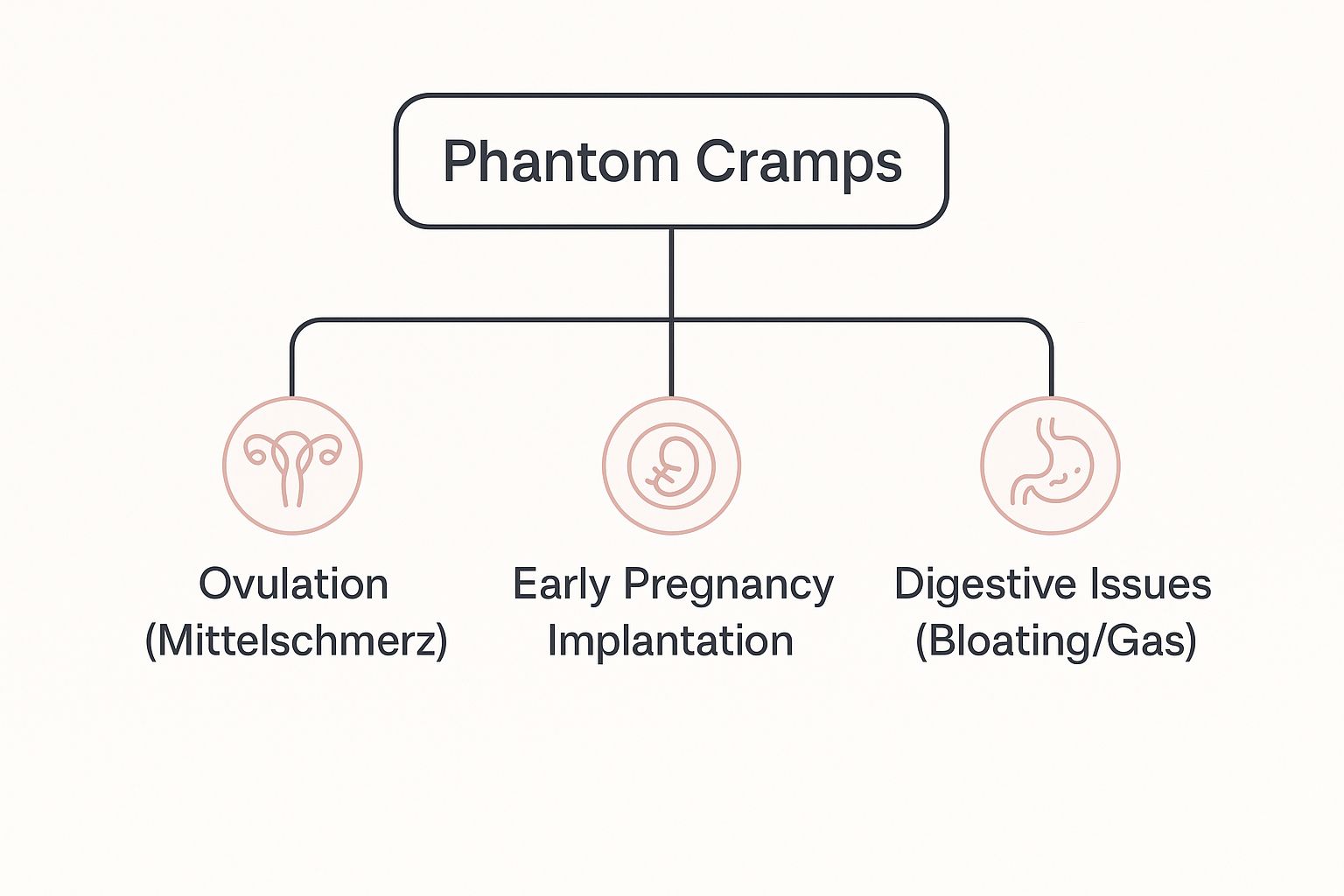
As you can see, ovulation, early pregnancy, and even digestive issues can all mimic menstrual cramps. Each of these events triggers physical responses in the pelvic region that feel surprisingly similar to the uterine contractions of your period.
Recognising these possibilities is the first step in decoding what your body is trying to tell you. If you want to get a better handle on your own rhythm, check out our guide on the 4 phases of the menstrual cycle.
Harmless Reasons for Non-Period Cramps
Before your mind starts racing, take a breath. It’s helpful to know that feeling period pains without an actual period is often due to completely normal, harmless reasons. Your body goes through a lot each cycle, and some of its processes can feel surprisingly similar to pre-menstrual cramps.
Let's start by looking at a common mid-cycle event that can cause a bit of a twinge.
The Mid-Cycle Ache: Ovulation
Ever felt a brief, one-sided ache in your lower abdomen about two weeks before your period is due? You might be experiencing ovulation pain. It even has a German name, ‘Mittelschmerz’, which literally translates to "middle pain."
Think of it like this: each month, one of your ovaries releases an egg. This isn’t a silent event. The egg follicle has to stretch and then rupture to set the egg free, which can cause a small amount of fluid and even blood to irritate nearby nerves. That irritation is what you feel as a dull ache or a sharp, sudden pang that typically only lasts from a few minutes to a couple of days.
It’s a completely normal part of a healthy cycle for many people and a clear sign that your body is doing exactly what it’s supposed to do.
Early Pregnancy and Implantation
Another very common reason for feeling crampy without a period is early pregnancy. When a fertilised egg attaches itself to the wall of your uterus—a process called implantation—it can cause mild, fleeting cramps that are often mistaken for the start of a period.
These implantation cramps usually feel a bit different from your usual pre-menstrual aches. They're often lighter and don't last as long. You might also notice some very light spotting, which looks different from your regular flow. It’s one of the earliest signs that you might be pregnant.
Key Takeaway: Both ovulation and implantation are natural processes that can cause cramping. Tracking your cycle can help you learn to tell them apart from your usual pre-menstrual symptoms.
When Stress and Digestion Are the Culprits
Sometimes, the cause of your cramps has less to do with your reproductive organs and more to do with other systems in your body.
- Stress and Hormones: High levels of stress can wreak havoc on your hormones. This can delay your period but still bring on all the classic PMS symptoms, including cramping, bloating, and moodiness. Your body is all geared up for menstruation, but stress hormones like cortisol are basically hitting the pause button.
- Digestive Troubles: It’s incredibly easy to mistake digestive discomfort for uterine cramps. Gas, bloating, and constipation can all cause aching and pressure in your lower abdomen, right where you’d expect period pain. This is especially true as the hormonal fluctuations around your cycle can also slow down your gut. For more insight, you can read about the connection between ovulation and bloating.
Understanding these common and benign causes can bring a great deal of reassurance when your body sends confusing signals.
When Cramps May Signal a Health Condition
While most causes of cramps without a period are totally normal, sometimes that persistent ache is your body’s way of flagging that something else is going on. It’s so important to listen to these signals, especially if the pain is severe, messes with your daily life, or just feels different from your usual cycle-related niggles.
Learning about these potential health conditions isn't about causing alarm — it's about empowerment. When you know what to look out for, you can advocate for your own health and have much clearer, more informed chats with your doctor.
Understanding Endometriosis
One of the most common culprits behind chronic pelvic pain is endometriosis. Imagine the tissue that normally lines your uterus (the endometrium) deciding to set up shop in other places, like on your ovaries, fallopian tubes, or even your bowel.
This out-of-place tissue acts just like it would inside your uterus; it thickens, breaks down, and bleeds with every cycle. But here's the problem: that blood has nowhere to go. It gets trapped, leading to inflammation, scar tissue, and intense pain that can flare up at any time, not just during your period. It's a key reason why you might feel period pains but have no period.
Endometriosis and chronic pelvic pain are huge health issues here in New Zealand. It's estimated that around 1 in 10 Kiwi women is affected by endometriosis, and a staggering 25% of females experience some form of pelvic pain. The most shocking part? The average delay in diagnosing endometriosis is nearly nine years, often because the pain is brushed off as just a "bad period." This can have a massive impact on quality of life, leading to missed school or work. You can find more about pelvic pain research in New Zealand and learn about these important health findings.
Other Potential Health Concerns
Beyond endometriosis, a few other conditions can cause cramping that feels suspiciously like period pain. Recognising their symptoms is the first step toward getting the right support.
Here are a few other possibilities to be aware of:
- Ovarian Cysts: These are little fluid-filled sacs that can form on an ovary. Most are harmless and vanish on their own, but a large or ruptured cyst can cause a sudden, sharp pain in your pelvis.
- Pelvic Inflammatory Disease (PID): This is an infection of the reproductive organs, often stemming from untreated sexually transmitted infections. PID can cause a dull, aching pain in the lower abdomen, sometimes alongside a fever and unusual discharge.
- Uterine Fibroids: These are non-cancerous growths that develop in or on the uterus. Depending on their size and where they're located, they can cause pressure, a feeling of heaviness, and cramping.
Key Takeaway: Persistent, severe, or unusual pelvic pain is not something you just have to put up with. It's a completely valid reason to see a doctor to rule out underlying conditions and find a real path to relief.
If your cramps come with other symptoms like a fever, heavy bleeding between periods, or pain during sex, it’s especially important to book a visit with your GP. Keeping a simple log of your symptoms can be incredibly helpful, giving your doctor a clearer picture of what's happening.
Practical Ways to Manage and Relieve Cramps
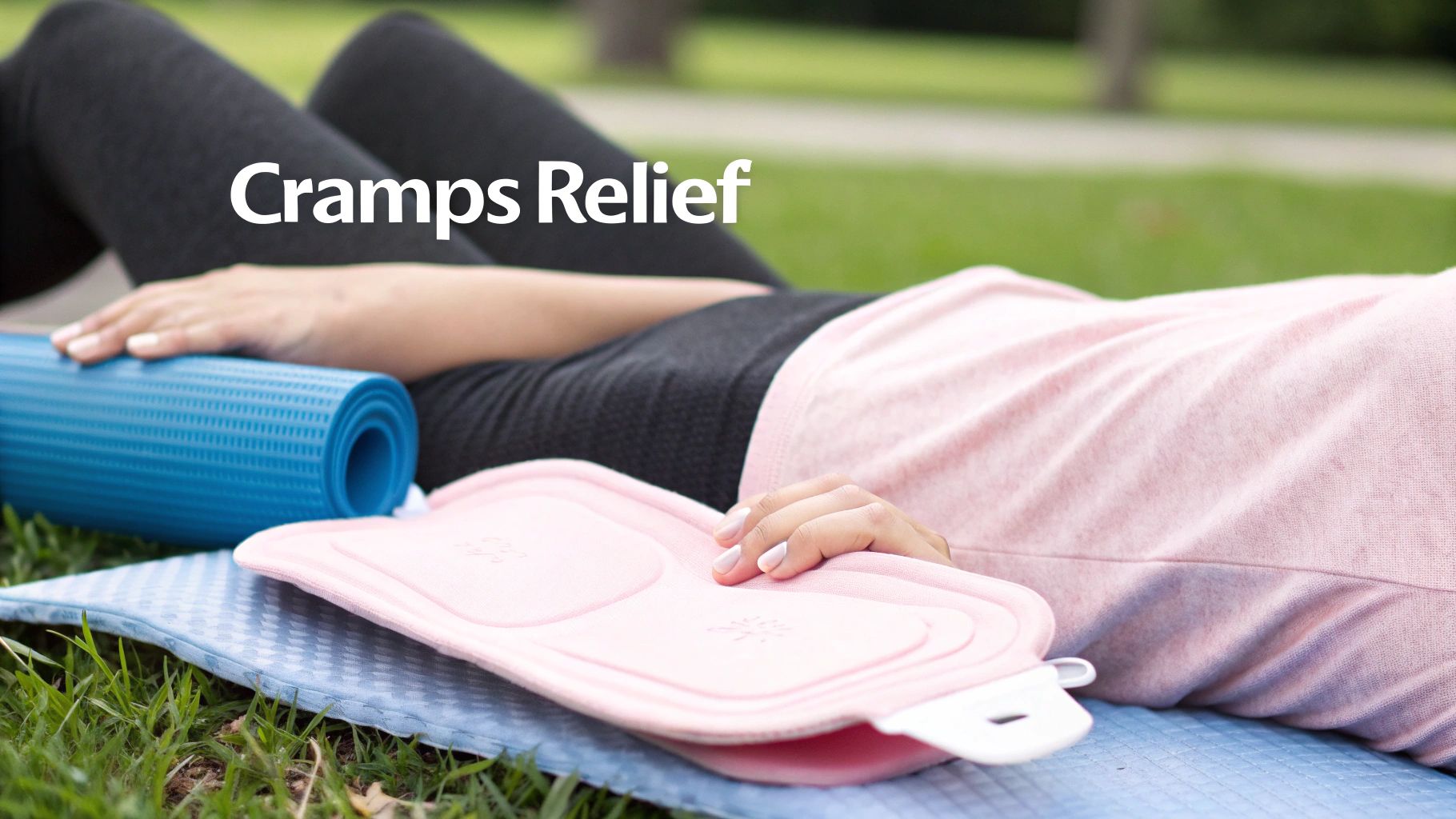
When you’re dealing with cramps but no period, finding some comfort is top of the list. Thankfully, there are plenty of gentle and effective ways to soothe those aches right from home. These strategies are all about helping your muscles relax and giving you some much-needed relief.
A simple heat pack or a warm bath can work absolute wonders. Applying warmth to your lower abdomen helps to relax the uterine and pelvic muscles, easing the tension that causes cramping. Think of it as a comforting hug for your insides, encouraging everything to gently unclench.
Gentle Movement and Mindful Eating
I know that when you’re in pain, curling up on the sofa feels like the only option, but gentle movement can be surprisingly helpful. Activities like restorative yoga or even just a slow walk can boost circulation in your pelvic region, which often helps to reduce discomfort. These movements also release endorphins—your body’s natural painkillers—offering a gentle lift in both mood and comfort.
What you eat and drink can play a huge role, too. Staying well-hydrated is absolutely key, as dehydration can make muscle cramps feel so much worse. On top of that, focusing on certain nutrients can make a real difference in managing how intense the cramps get.
Here are a few dietary adjustments to consider:
- Boost Your Magnesium: This essential mineral helps regulate muscle function. You can find it in leafy greens like spinach, nuts, seeds, and even a bit of dark chocolate.
- Stay Hydrated: Aim for plenty of water throughout the day. It helps keep your muscles functioning smoothly and can reduce that awful bloating.
- Limit Inflammatory Foods: Cutting back on caffeine, super salty snacks, and highly processed foods around the time you expect cramps may help lessen their severity.
Key Insight: Combining gentle heat, mindful movement, and a supportive diet creates a powerful toolkit for managing pelvic pain. These small, consistent habits can help you feel more in control of your body's signals.
The Power of Tracking Your Symptoms
Beyond immediate relief, one of the most empowering things you can do is track your symptoms. This doesn't need to be complicated at all—a simple diary or a note on your phone is perfect.
By logging the details of your pain, you create a valuable record that helps you and your doctor understand what's really going on. For more ideas on finding comfort, you can explore our detailed guide on period pain relief in NZ.
Next time you feel a cramp, try jotting down:
- Location: Is the pain on one side, right in the centre, or all over?
- Intensity: Rate it on a scale of 1 to 10.
- Timing: When in your cycle does it happen? How long does it last?
- Type of Pain: Is it a dull ache, a sharp twinge, or a constant throb?
This information transforms a vague complaint of "cramping" into a clear, detailed picture. It makes conversations with your doctor far more productive and puts you firmly in the driver's seat of your health journey.
Navigating Your Cycle With Confidence
Feeling ready for your period, whether it shows up right on schedule or after a few days of teasing you with cramps, can make a huge difference to your peace of mind. Having reliable, comfortable period care tucked away in your bag means one less thing to stress about. It’s that feeling of being in control and ready for whatever your body decides to do.
This is where choosing the right products becomes a genuine act of self-care. When you’re dealing with the unpredictability of cramps without a period, simple and effective options often bring the most comfort and confidence.
Discreet and Practical Period Care
For anyone who prefers a minimalist, eco-conscious approach, digital (non-applicator) tampons are a brilliant choice. Because they don’t have a bulky plastic applicator, they create far less waste. They’re also incredibly discreet—perfect for slipping into a pocket or the coin section of your purse.
And if you’ve never used one, getting the hang of it is really straightforward. Here’s a quick guide:
- Always wash your hands thoroughly before you even touch the wrapper.
- Unwrap it and give the string a gentle tug to make sure it’s secure.
- Get into a comfortable position—sitting on the loo or standing with one leg up on the bath often works well.
- Gently guide the tampon into your vagina, aiming it towards your lower back, until you can no longer feel it.
Key Insight: Choosing period products that fit your lifestyle and values isn't just about practicality—it’s about empowerment. It turns a routine task into a mindful choice for your body and the planet.
The Broader Conversation on Period Equity
Feeling prepared with products you trust is a personal comfort, but it also links to a much bigger conversation: period equity. Here in New Zealand, making sure everyone can get the menstrual products they need is a serious issue. When people can’t afford or access period care, it directly impacts their health, their dignity, and their ability to show up for school, work, and life.
By supporting brands that contribute to this cause and advocating for better access, we help build a community of understanding and support for all Kiwis who menstruate. It’s a reminder that managing our cycles with confidence should be a right, not a privilege. This collective effort strengthens our communities and ensures no one has to face their period unprepared.
When Should I See a Doctor in New Zealand?
Advocating for your own health is a powerful skill, especially when your body is sending confusing signals like period pains without a period. While lots of causes are totally harmless, you should never ignore persistent or severe pain. Knowing when to pick up the phone and book a GP appointment is a huge part of taking charge of your wellbeing.
The simplest rule? Trust your gut. If the pain is bad enough to disrupt your daily life—making it hard to work, study, or just get through the day—that’s a clear sign to get it checked out. You don’t have to just push through horrible discomfort.
Recognising Red Flags
Some symptoms are more urgent than others and are basically red flags that definitely warrant a chat with a health professional. It’s time to see a doctor if your cramping is joined by any of the following:
- Sudden or Sharp Pain: Pain that comes on intensely and out of nowhere, especially if it’s focused on one side.
- Fever or Chills: This could signal an infection, like Pelvic Inflammatory Disease (PID).
- Unusual Discharge: Any discharge that has a strong odour, a strange colour (like yellow or green), or comes with itching or burning.
- Pain That Keeps Getting Worse: If your cramps are becoming more severe over time or aren't getting better with your usual pain relief.
This is a really important conversation here in New Zealand, where recent research has shown just how common pelvic pain is. A study on young Kiwi women found that a massive 89% experience dysmenorrhea (painful periods), with many reporting cramping before or even without menstruation. The pain often comes with tiredness (78.1%) and mood changes (72.5%), which can point to underlying conditions. Given that up to 27% of students miss school because of these symptoms, it’s clear this is a major health issue. You can read more about these findings on pelvic pain in NZ.
Key Takeaway: Persistent pain is not normal. By seeking help, you’re not overreacting—you are being proactive about your health, and you deserve to have your concerns taken seriously.
Making the Most of Your Appointment
When you see your doctor in the NZ healthcare system, coming prepared can make all the difference. Try to describe your symptoms with as much detail as you can—that symptom log we talked about earlier is perfect for this.
Be ready to explain the pain's location, how intense it is, and where it happens in your cycle. And don’t be afraid to ask questions until you feel you have the answers you need.
Got Questions? We've Got Answers
Navigating the world of cramps, cycles, and hormones can feel like a bit of a maze. It’s completely normal to have questions, especially when your body does something unexpected—like giving you period pains without the actual period. Let’s clear up a few of the most common queries we hear.
Can Stress Really Cause Cramps Without a Period?
Absolutely. Think of your hormones as a finely tuned orchestra—stress is the one instrument that comes in way too loud and throws everything off-key. When you’re stressed, your body pumps out cortisol, a hormone that can hit pause on your cycle, delaying ovulation or your period altogether.
Even if your period doesn’t show up, your body might still be running the pre-period programme. That means you can still get all the familiar symptoms like cramping, bloating, and moodiness, right on schedule.
How Can I Tell Implantation Cramps from Period Cramps?
This is a tricky one, as they can feel pretty similar. But there are a few subtle differences to watch for. Implantation cramping happens when a fertilised egg snuggles into the uterine wall, and it’s often much milder and shorter-lived than your typical menstrual ache. Many describe it as more of a light pricking or pulling feeling.
The biggest clue is timing. Implantation cramps usually pop up around 6 to 12 days after ovulation—often before your period is even due. They might also come with very light spotting (pink or brown), which is much less than a regular flow.
Is It Normal to Get Cramps a Week Before My Period?
Yes, for many people, it is. Cramping a week or so before your period can be a sign of ovulation. This mid-cycle event, sometimes called 'Mittelschmerz' (German for "middle pain"), can cause a brief, one-sided ache as an egg is released from the ovary. It’s a normal part of a healthy cycle.
However, if the pain feels severe, lasts for days, or just feels different from your usual pattern, it’s always a good idea to track it. Making a quick note of the intensity and location can give you and your doctor a clearer picture of what might be going on.
At Crimson Organic, we believe understanding your body is the first step towards feeling your best. Our certified organic tampons and period care are designed to support you with comfort and confidence through every phase of your cycle. Ready to make the switch? Explore our range at https://crimsonorganic.co.nz.